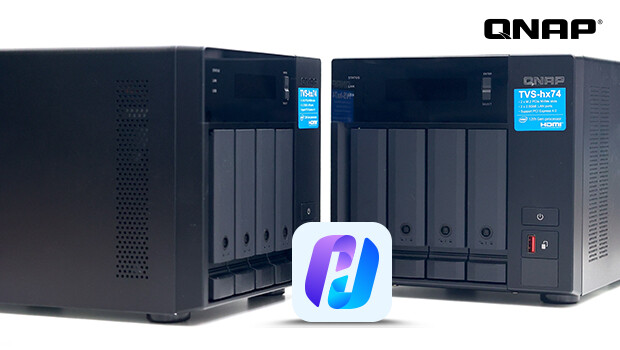
QNAP presents a High Availability (HA) solution that allows two NAS units to be connected via a network to form a virtual cluster. If one NAS unit experiences a service disruption, the HA system can perform automatic failover and quickly restore services.
Preparation & Setup
-
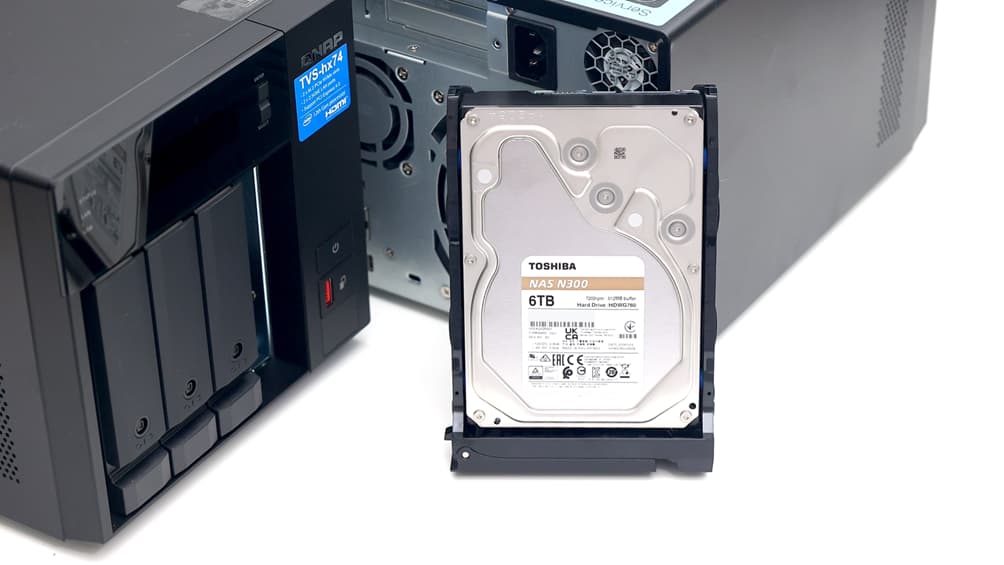
Both NAS units must have identical models and hardware specifications — in this article, two QNAP TVS‑h474 units and six TOSHIBA N300 6 TB hard disks are used.
-
Must use QTS hero operating system version 5.3 (or higher) and the High Availability application from the App Center.
-
Network connection: both NAS units are connected to the same switch, plus one direct cable between the NAS units as a “Heartbeat link” for real-time synchronization.
Failover Scenario Testing
Several scenarios were tested to see how quickly the HA system responds when disruptions occur:
-
Disconnecting the network cable on the active node
When the network cable of the active unit is unplugged, the HA system detects and performs failover to the passive node within 89 seconds.
After the cable is reconnected, the process of returning to the original position is completed in ~74 seconds. -
Disconnecting the network cable on the passive node
When the cable of the passive unit is unplugged, services can still continue and failover is recorded as completed in ~82 seconds. -
Disconnecting the “Heartbeat link” cable between NAS units
If the synchronization link between NAS units is disrupted, the impact is much smaller — even during streaming activity or SMB file transfers, users hardly notice any disruption.Key Benefits
-
When transferring files using the SMB protocol, if the active unit suddenly goes offline, the transfer process only pauses temporarily, then automatically resumes via the passive node in less than 90 seconds — without needing to restart.
-
For small to medium business scenarios or studios that require quick recovery but do not want long downtime, QNAP’s active-passive HA solution is an economical and effective choice.
-
For higher needs (such as zero-downtime), QNAP also recommends the Network HA option.
Notes & Tips
-
Ensure both NAS units have identical specifications for optimal synchronization.
-
Network infrastructure is crucial: a reliable switch and proper cables will help failover occur smoothly.
-
Periodically test failover conditions (for example, simulate unplugging cables) to ensure the system is truly ready when needed.
-
Although downtime is very short (<90 seconds), do not neglect traditional backup processes — HA helps service availability, not a replacement for data backup.
Interested in this information? You can check here for more details QNAP High Availability
-
-
-