
Build h6.1.0.3640 (20261007), in the Download Center now.
The AI features from the QTS release are included. On hero, this release also strengthens deletion control for protected data, and transport encryption.
AI features
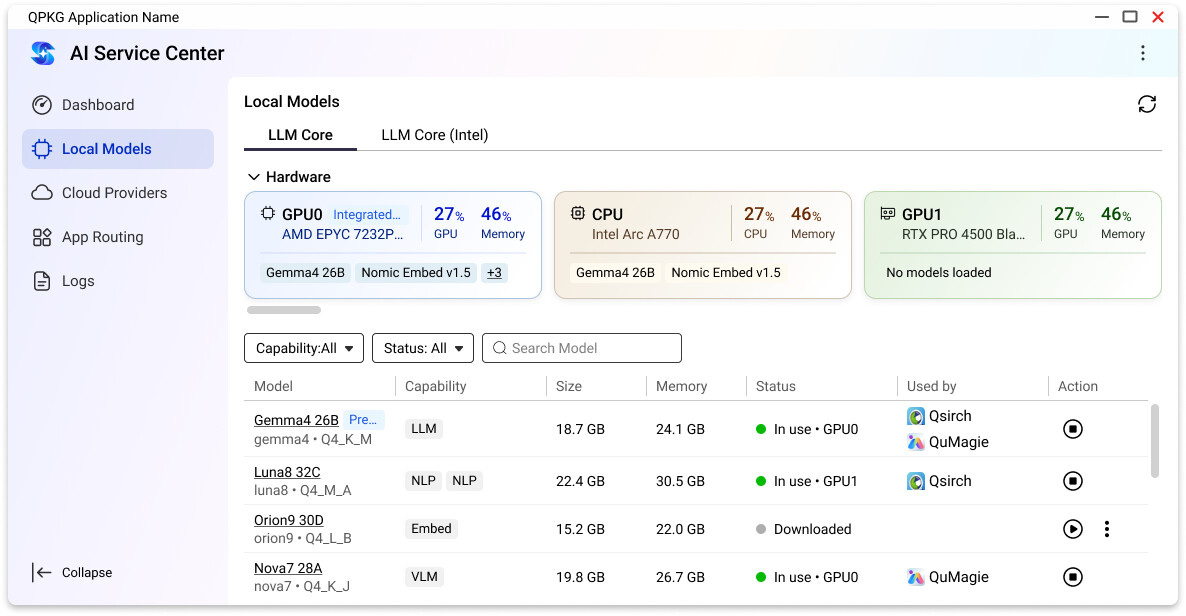
AI Service Center (a centralized hub for managing and deploying AI models across applications, with hybrid compute across local CPU/iGPU/NPU/discrete GPUs and OpenAI, Gemini and Azure), QuAgent (a conversational AI assistant for NAS management), and Qsirch AI semantic search (find files by describing them).
The QAI series — QNAP’s AI-configured models, including the QAI-h1290FX — runs QuTS hero, and can enable AI Mode during initialization.
Deletion control for protected data
WORM and Immutable Snapshots protect the data itself: once written, it cannot be modified or deleted during the retention period. h6.1.0 extends that protection to deletion operations.
Storage Manager now stops the deletion when a shared folder contains WORM data or unexpired immutable snapshots.
Enterprise WORM shared folders and immutable snapshots can be removed through Secure Deletion, which requires USB key verification:
- Enter the administrator password — the wizard also lists the protections currently in force on that folder
- USB key file — the NAS generates a one-time key file, downloadable once. Copy it to a USB drive and insert it into the NAS; verification runs on hot-plug, then the deletion executes
The key file is valid for one hour. It expires if unused, must be reissued if lost, and can be invalidated immediately with Abort. A system notification is sent once the deletion completes.
Administrator credentials alone cannot complete a deletion remotely — someone has to insert the key at the machine.

Quantum-safe encryption
Set the TLS version in Control Panel to 1.3 and the system automatically enables PQC (post-quantum cryptography), showing the secure connection status on the login screen and desktop.
Why it matters: an attacker can record encrypted traffic now, store it, and decrypt it once quantum computers mature. Data you’re required to keep for ten years is still sensitive then — transport encryption has to last as long as the retention period.
How it works: NIST-standard ML-KEM (FIPS 203) runs alongside classical X25519. Both must be broken to read the session, so security is never lower than today’s. No configuration needed; Chrome, Firefox and Edge already support it.
Snapshots and replication
- SnapSync now supports token authentication between source and destination. Not backward compatible — both ends must be upgraded before jobs will run. Plan the upgrade order.
- Snapshot Replica: “Timeout” is now “Retry interval”. If a timeout or request failure occurs, the system retries the connection after the specified interval. Default 300 seconds, range 1 to 3600.
Also in this release
- Storage Manager adjusts the ARC memory lower limits for stability
- Intel Arc B70 discrete graphics support on the Control Panel’s Hardware Resource page — model, temperature, utilisation and memory usage.
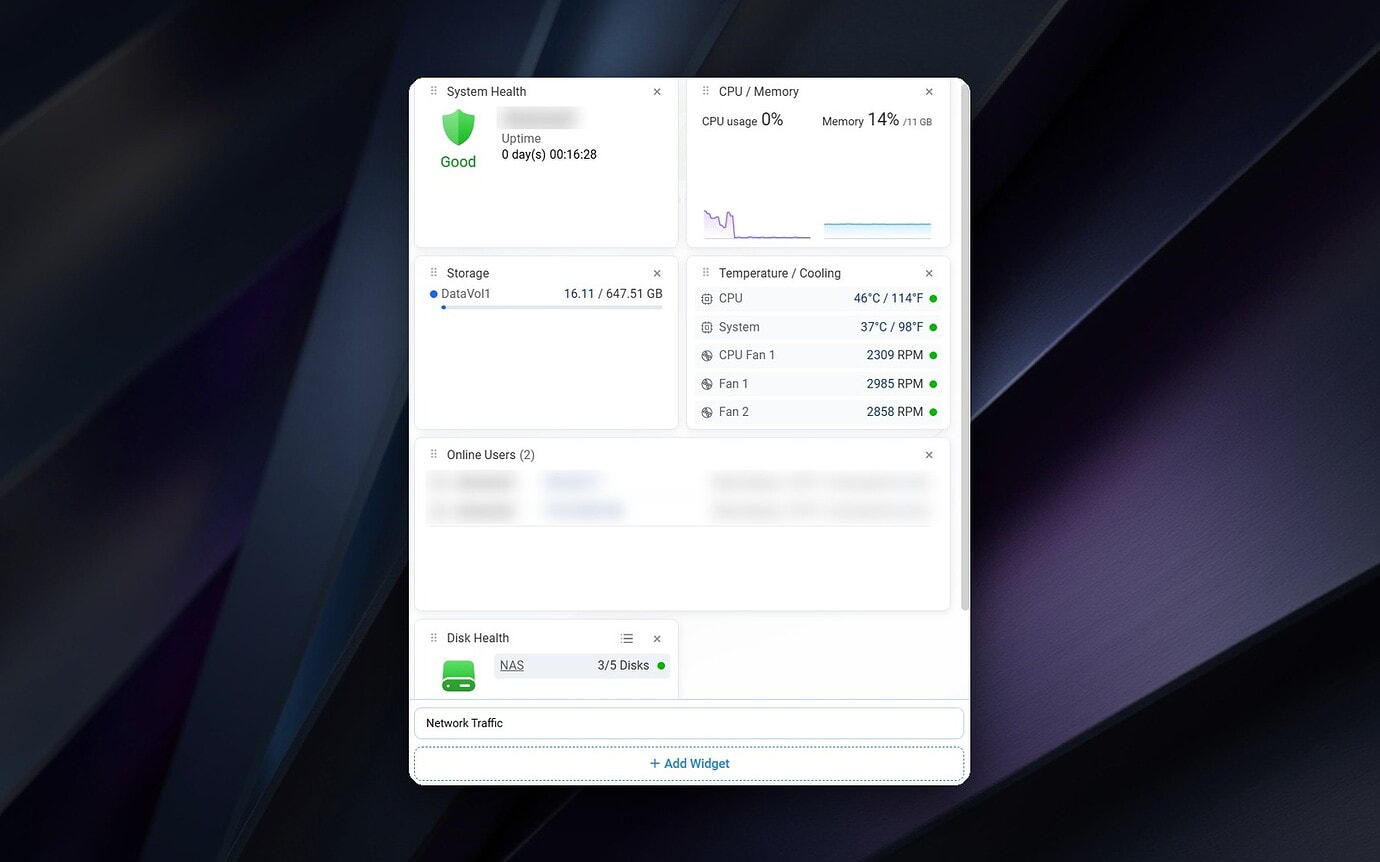
- Improved QNAP Account login flow and a redesigned dashboard — system health, CPU/memory, storage and device temperature in a customizable right-hand panel
- Multiple security updates
Download and testing
This is a Public Beta. Suggest install it on a test system, not on production data. WORM and immutable snapshots are designed so protected data cannot be removed during the retention period — be sure of what you’re setting before you test 
- Build: h6.1.0.3640 (20261007)
- Now: QNAP Download Center & Update Manually
- From 15 October: push update to everyone on h5.2 / h5.3 / h5.6 / h6.0 Beta
If you operate under a retention mandate, tell us whether the Secure Deletion flow meets your audit requirements. 
Release Notes : https://www.qnap.com/en/release-notes/quts_hero/overview/h6.1.0