Dear QVR Face users,
We’re excited to announce the official release of QVR Face 2.3.0!
As AI-powered video recognition applications continue to evolve, system performance, compatibility with various video sources, and cross-system integration are becoming decisive factors for deploying intelligent surveillance solutions. This update expands QVR Face’s support for NVIDIA GPU hardware acceleration by adding compatibility with NVIDIA RTX-50 series graphics cards. Additional features include real-time dewarping of selected fisheye image regions with facial recognition, multi-group profile management, real-time detection variables for Event URLs, and the ability to send events to Nx VMS. This allows users to build facial recognition systems that are more efficient, flexible, and easier to integrate.
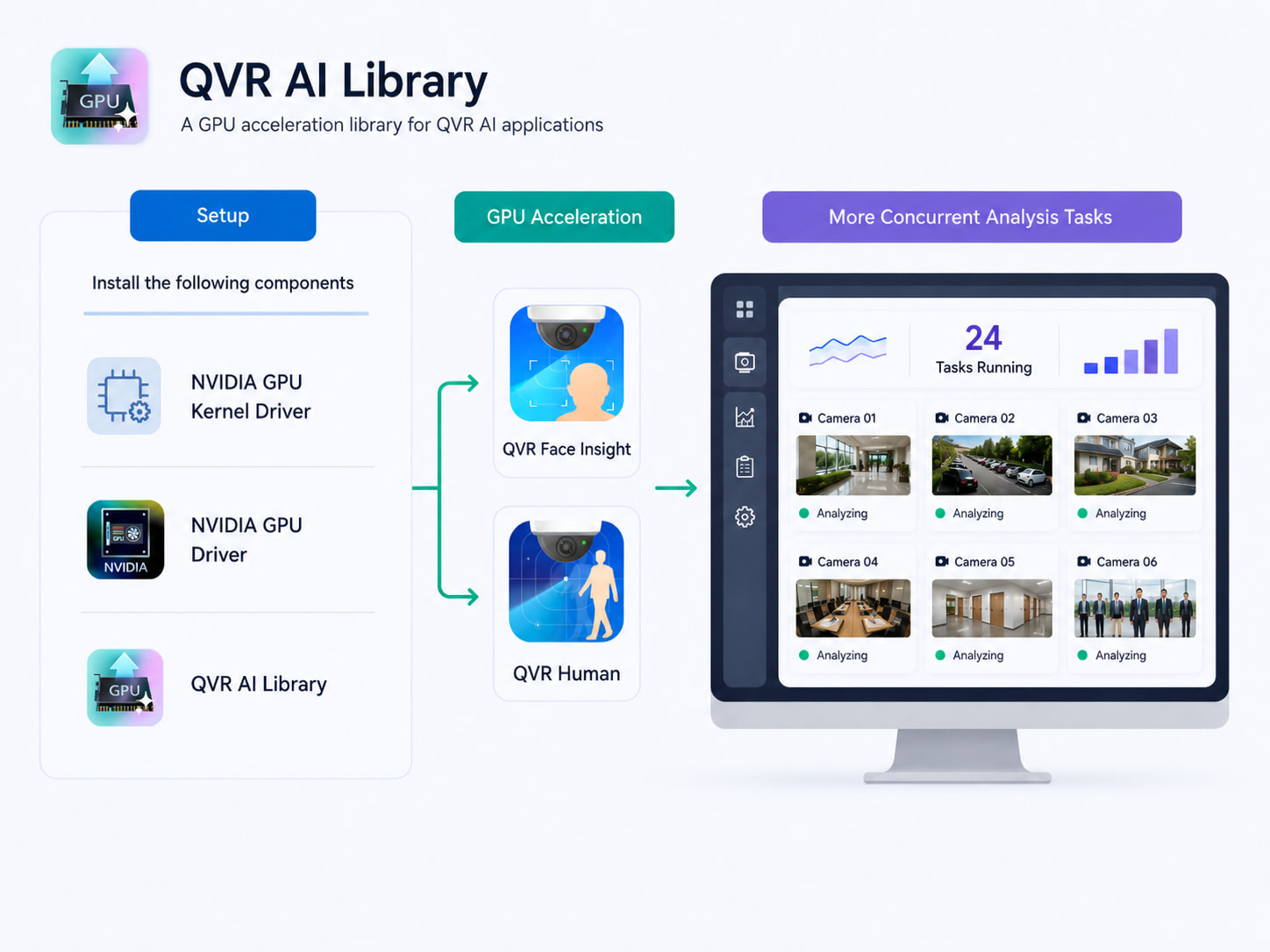
Next-Generation Hardware Performance: Support for NVIDIA RTX-50 Series GPUs
QVR Face 2.3.0 now supports NVIDIA RTX-50 series graphics cards. QVR AI Library 1.1.0 or above is required for this. With hardware acceleration, users can boost the performance of AI-powered video analysis. In scenarios where multiple video streams are processed simultaneously or computationally intensive facial recognition tasks are performed, GPU acceleration can significantly reduce the system’s computational load while increasing detection performance and deployment flexibility. Accelerate your QVR Face today!
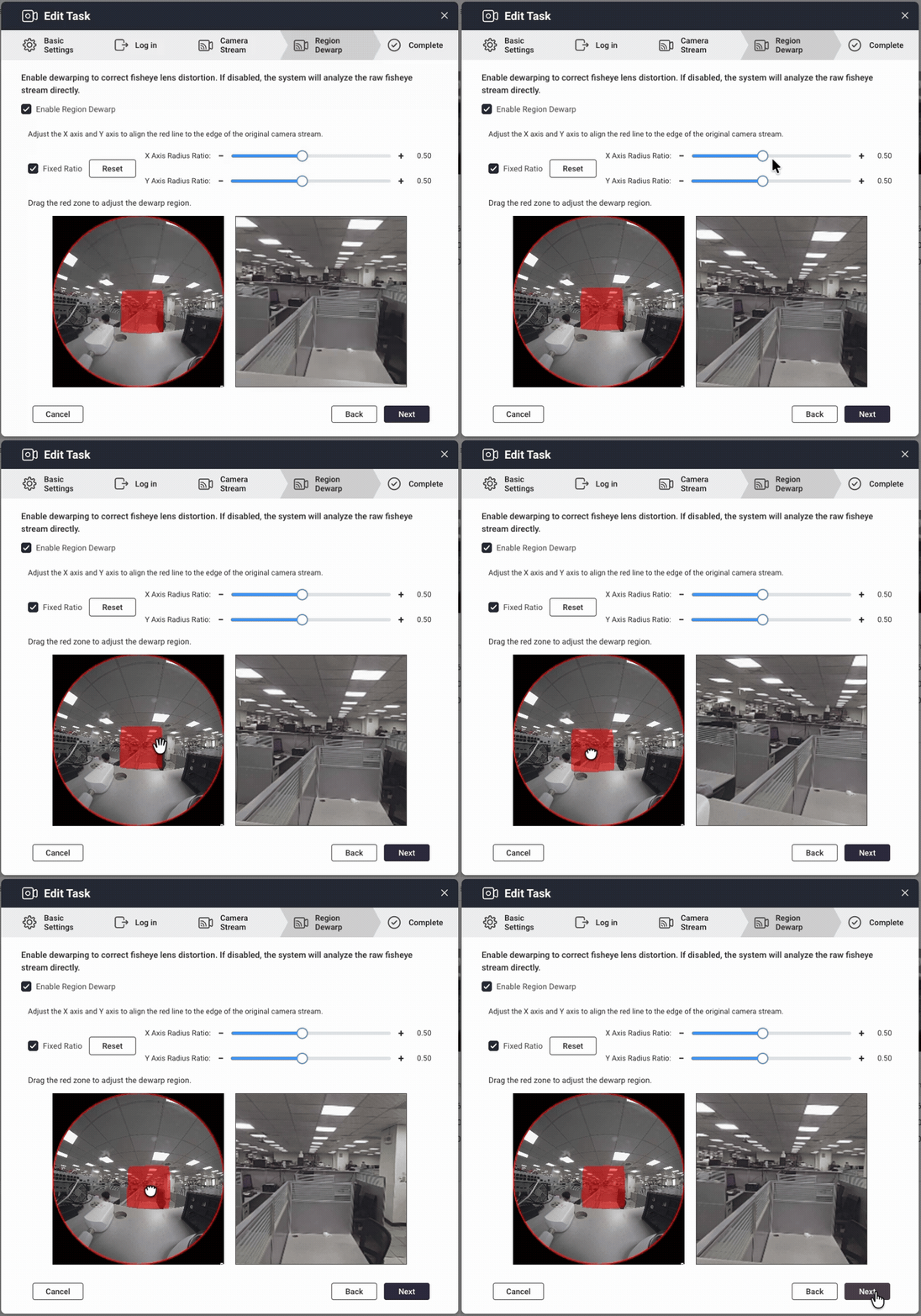
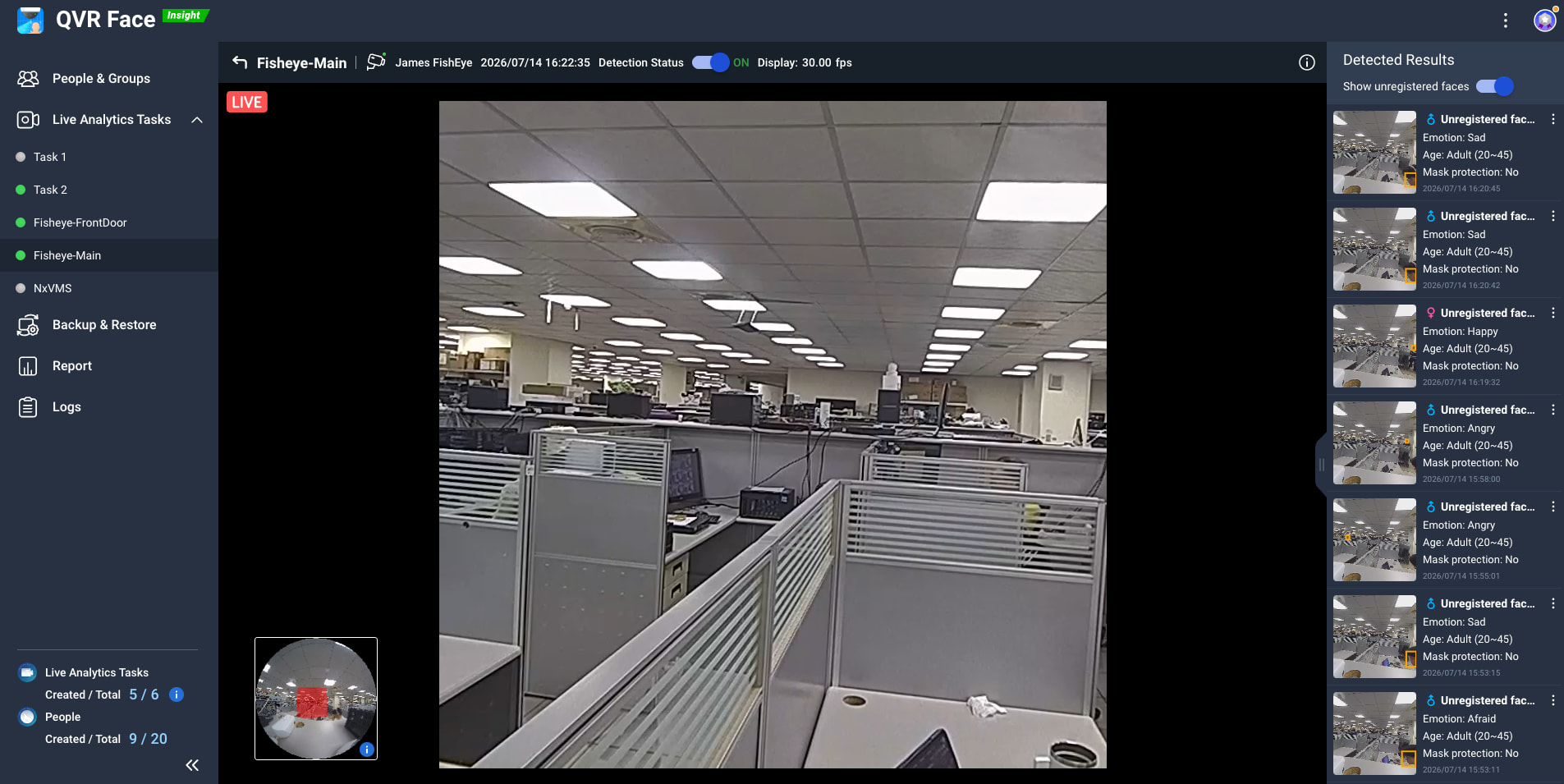
Enhanced Use Cases for Fisheye Cameras: Real-Time Dewarping of Selected Fisheye Image Regions and Facial Recognition
Fisheye cameras offer wide-area surveillance coverage, but image distortion at the edges can impact facial recognition performance. QVR Face 2.3.0 supports real-time dewarping of selected fisheye image regions for facial recognition. This enables users to calibrate and analyze specific image areas, reducing detection gaps when using fisheye cameras and expanding the use cases for a single device at entrances, exits, open areas, and large-scale surveillance environments.
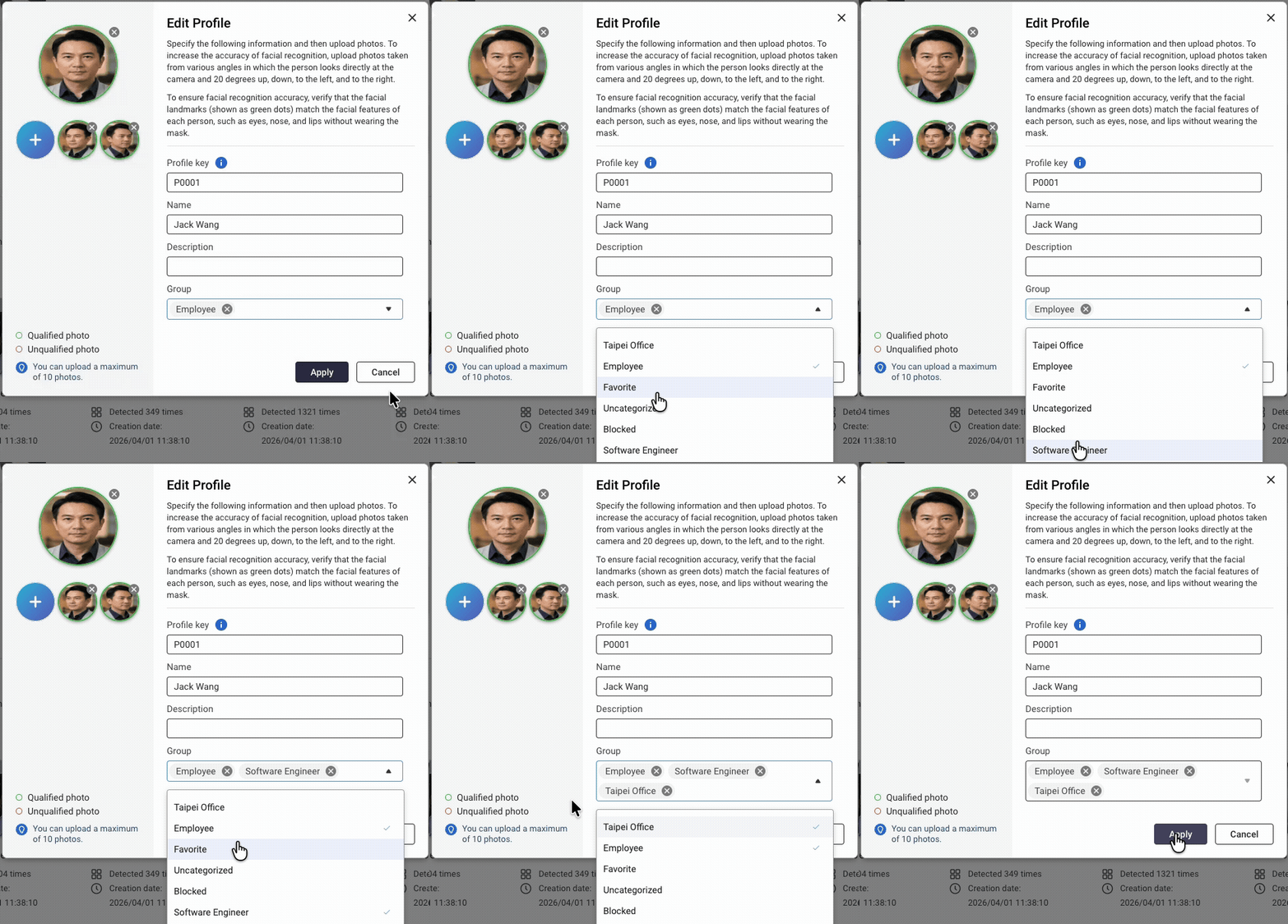
More Flexible Data Classification: Profiles Can Be Added to Multiple Groups
In real-life management scenarios, the same person may belong to different departments, permission groups, or application categories at the same time. With QVR Face 2.3.0, profiles can be added to multiple groups, allowing administrators to classify and manage personal data more flexibly and making the maintenance of large facial databases more efficient. For example, an employee can simultaneously be classified as “Headquarters Employee,” a member of the “Research and Development Department,” and part of a “VIP Access List.” This greatly simplifies future searches, filtering, and event-based applications.
Improved Cross-System Event Integration: Real-Time Detection Variables for Event URLs and Custom Events for Nx Witness
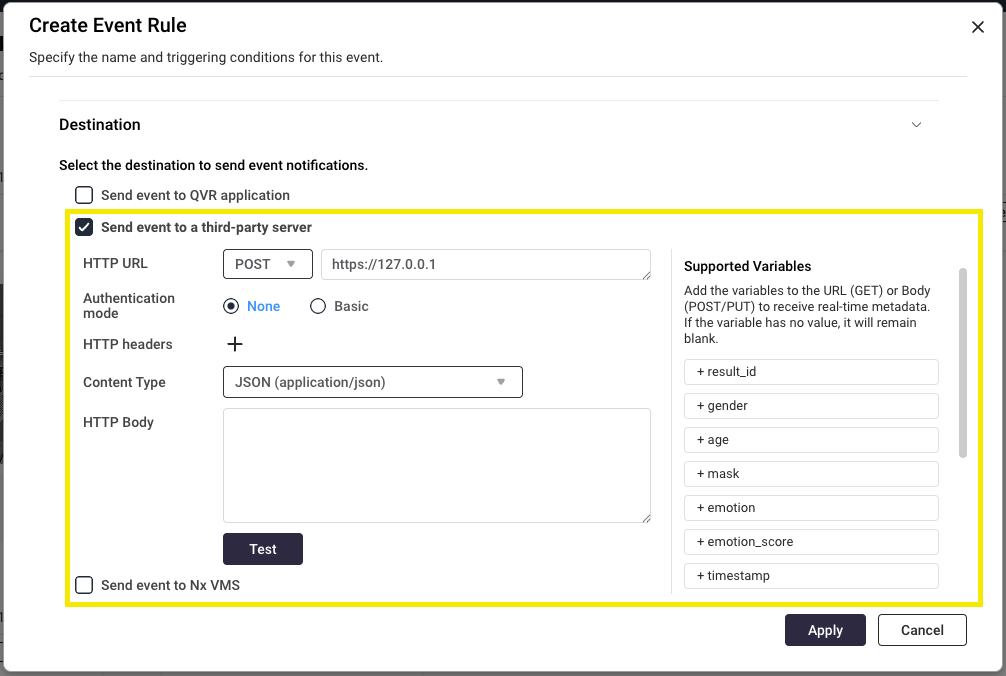
QVR Face 2.3.0 enhances cross-system event integration by allowing Event URLs to contain real-time detection variables. Users can transmit detection results, event information, and related detection variables to third-party platforms, event dashboards, access control systems, or other automated workflows. This boosts flexibility for using and displaying surveillance events.
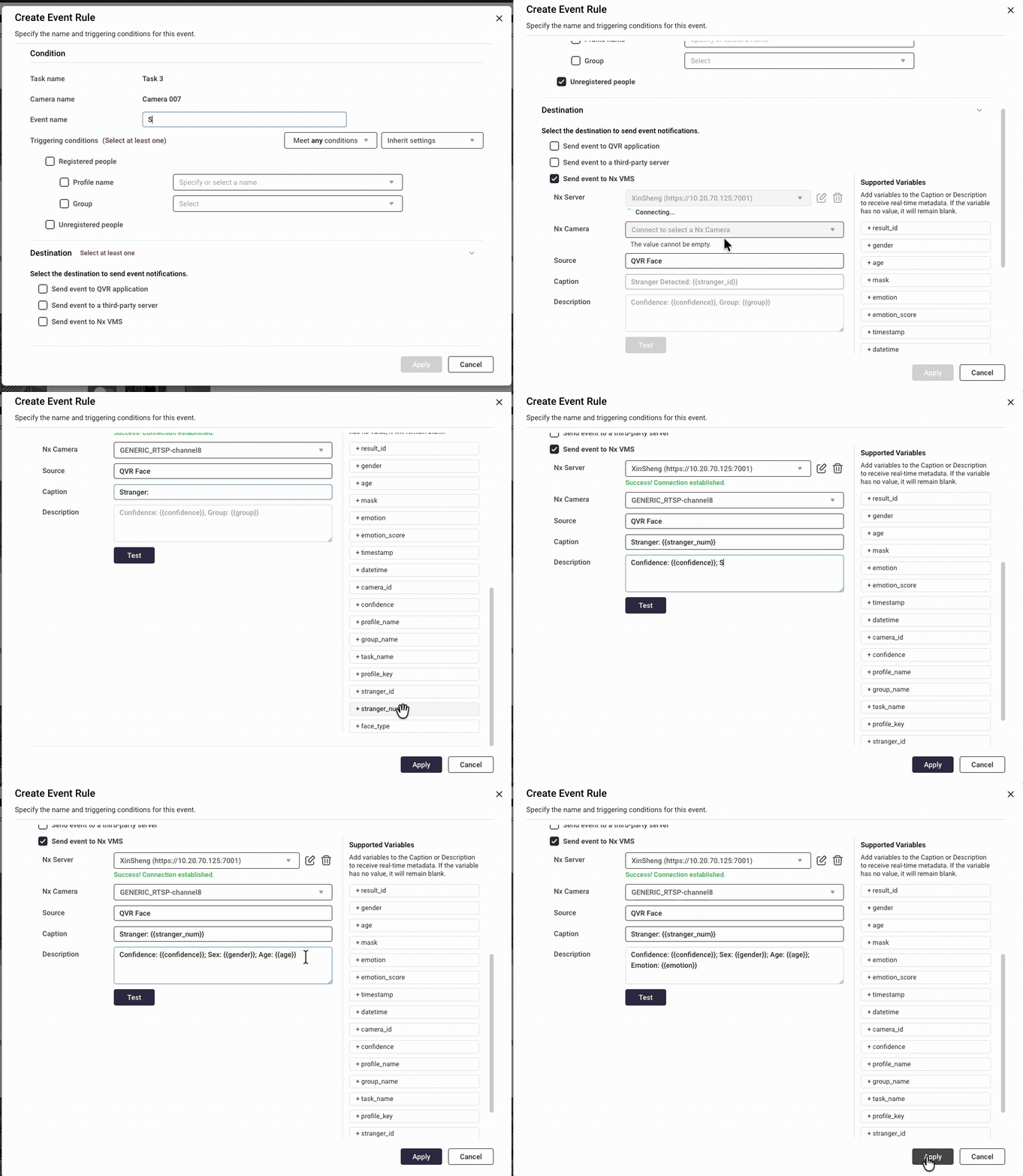
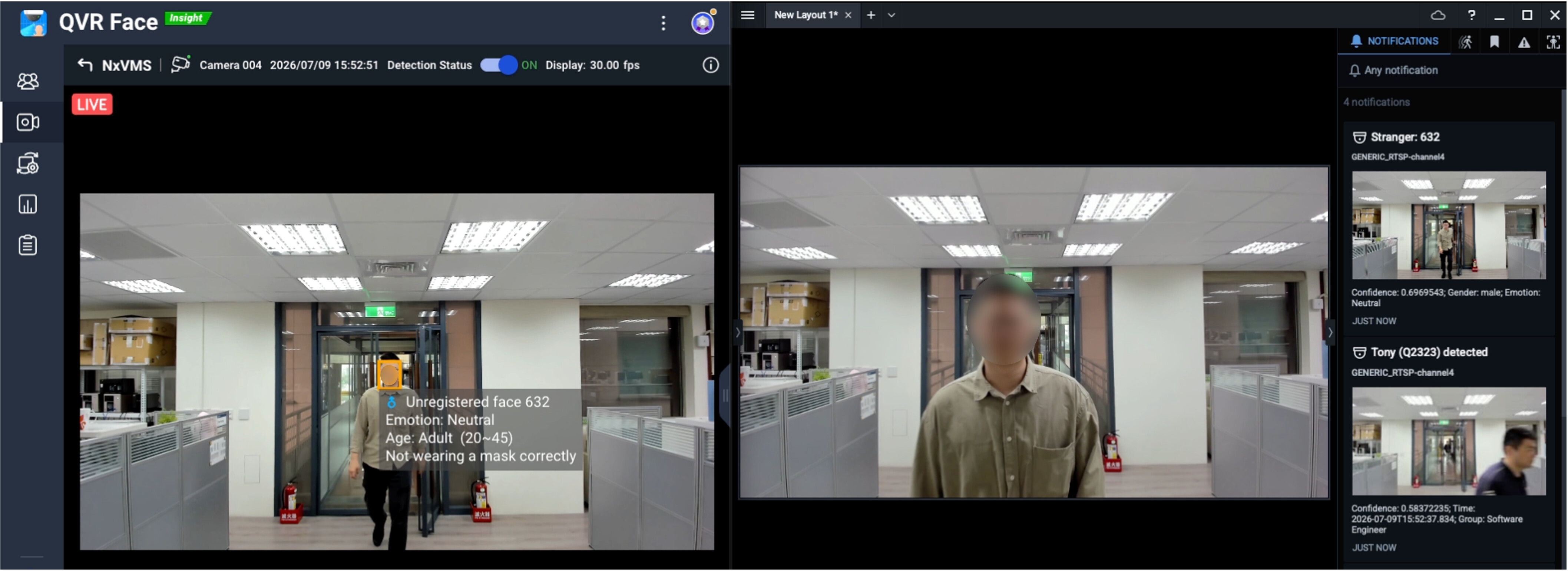
This update also offers deeper integration with Nx Witness. You can use QVR Face for facial recognition and then transmit detection events and variables to an existing Nx Witness system. Sites already equipped with Nx VMS can thus set up more customized event notifications and surveillance workflows. This further enhances system integration and event management efficiency. (Nx VMS event integration requires a version of Nx Witness VMS that supports the REST Generic Event API.)
Enhanced User Experience and System Stability
Alongside the new features, QVR Face 2.3.0 includes several improvements to usability and system mechanisms:
- Supports creating facial recognition tasks connecting to QVR Surveillance systems with two-step verification enabled.
- Adds notifications for manual upload of similar photos to make profile creation more efficient and avoid duplicate registrations.
- Adds sorting options for unregistered faces, making data management easier.
- Improves the Chinese-language search mechanism for a better search experience.
Highlights of This Update
| Feature Category | Update Highlights |
|---|---|
| Hardware Compatibility | Supports NVIDIA RTX-50 series graphics cards |
| Fisheye Camera Applications | Supports real-time dewarping of selected fisheye image regions and facial recognition |
| Profile Management | Supports adding profiles to multiple groups, as well as sorting and filtering unregistered faces for more efficient data management |
| QVR Client Integration | Supports creating profile photos from detection snapshots |
| Cross-System Real-Time Notifications | Event URLs support real-time detection variables |
| Comprehensive Cross-Vendor Integration | Supports sending facial recognition events to Nx VMS |
| System Stability | Optimizes synchronization mechanisms, storage protection, and Chinese-language search; resolves known issues |
Download QVR Face 2.3.0 now!
Benefit from even more efficient GPU acceleration, more flexible fisheye dewarping and facial recognition, more convenient data management, and comprehensive cross-system event integration.
For more details, see the release notes: Apps Release Notes | QNAP
Thank you for your continued support of QNAP and the QVR product family. We will continue to develop even smarter, more stable, and more easily integrated AI solutions for video surveillance.