Use case: Backup to multiple online storage accounts

Use Case This Time: Backing Up to Multiple Online Storage Accounts

When using a NAS, you may often hear about cases where “personal folders are created and each person saves their files under those folders.” In such situations, there may be cases where you also “want to back up/synchronize each folder under a separate account when backing up/synchronizing to cloud storage.”

This time, I checked whether it is actually possible to back up/synchronize to different cloud storage accounts for each folder, and I would like to share my findings here.

Preparation on the Cloud Storage Side

For this test, I will use “Google Drive, which provides free space when you create an account.”

Since I already have several existing Google accounts, I will use those for testing.

Also, I will not discuss the backup/sync capacity here. I will focus solely on the point of “whether backup/sync is possible to multiple Google Drive accounts.”

Installing HBS 3 and Adding Cloud Storage

Access the QNAP NAS settings screen and install HBS 3 from the App Center.
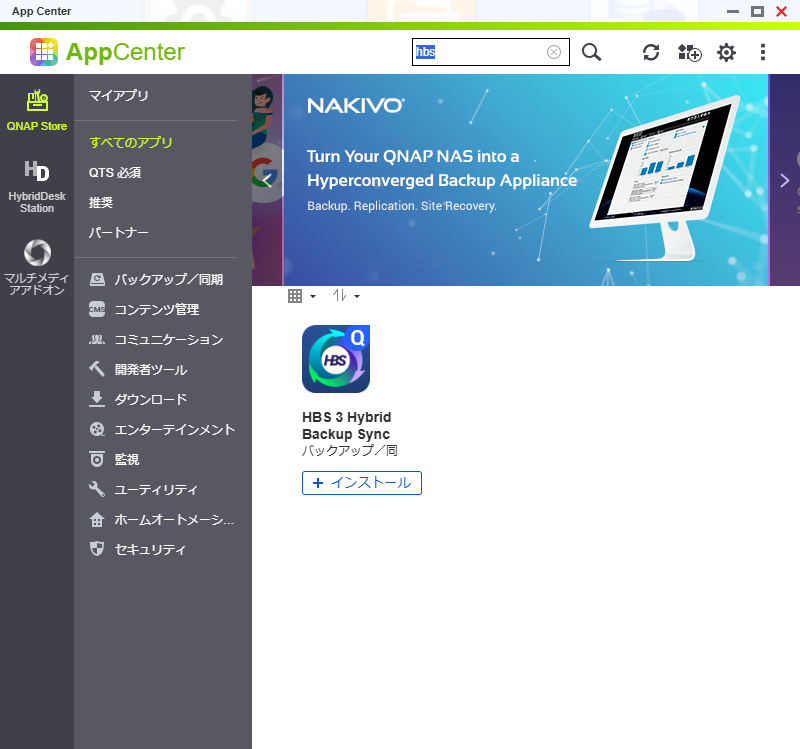
If you enter “hbs” or similar in the search box, the application will appear, so install it.
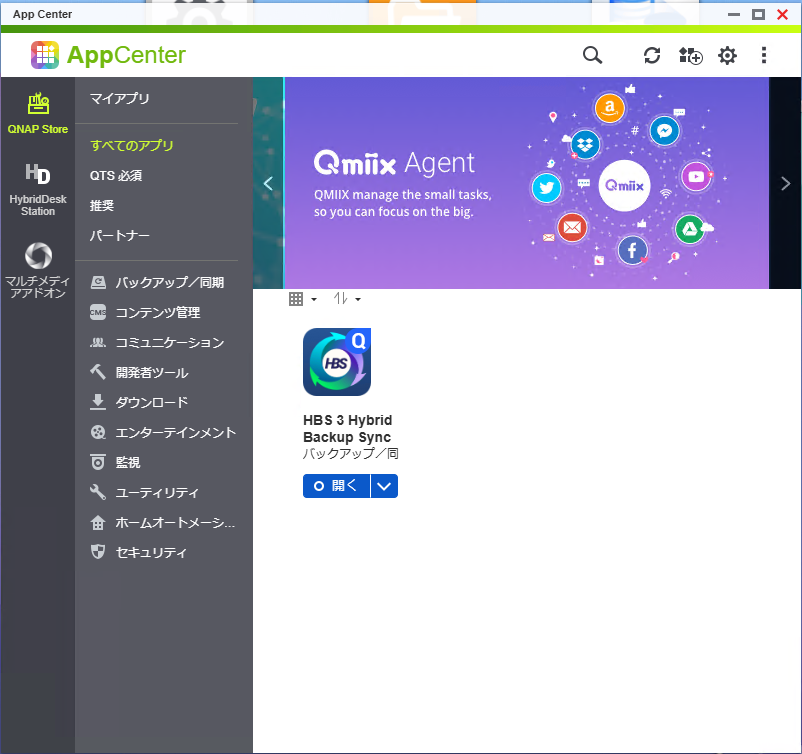
Once the installation is complete, click the “Open” button to open the settings screen.
When the settings screen opens, move to “Storage Space.”
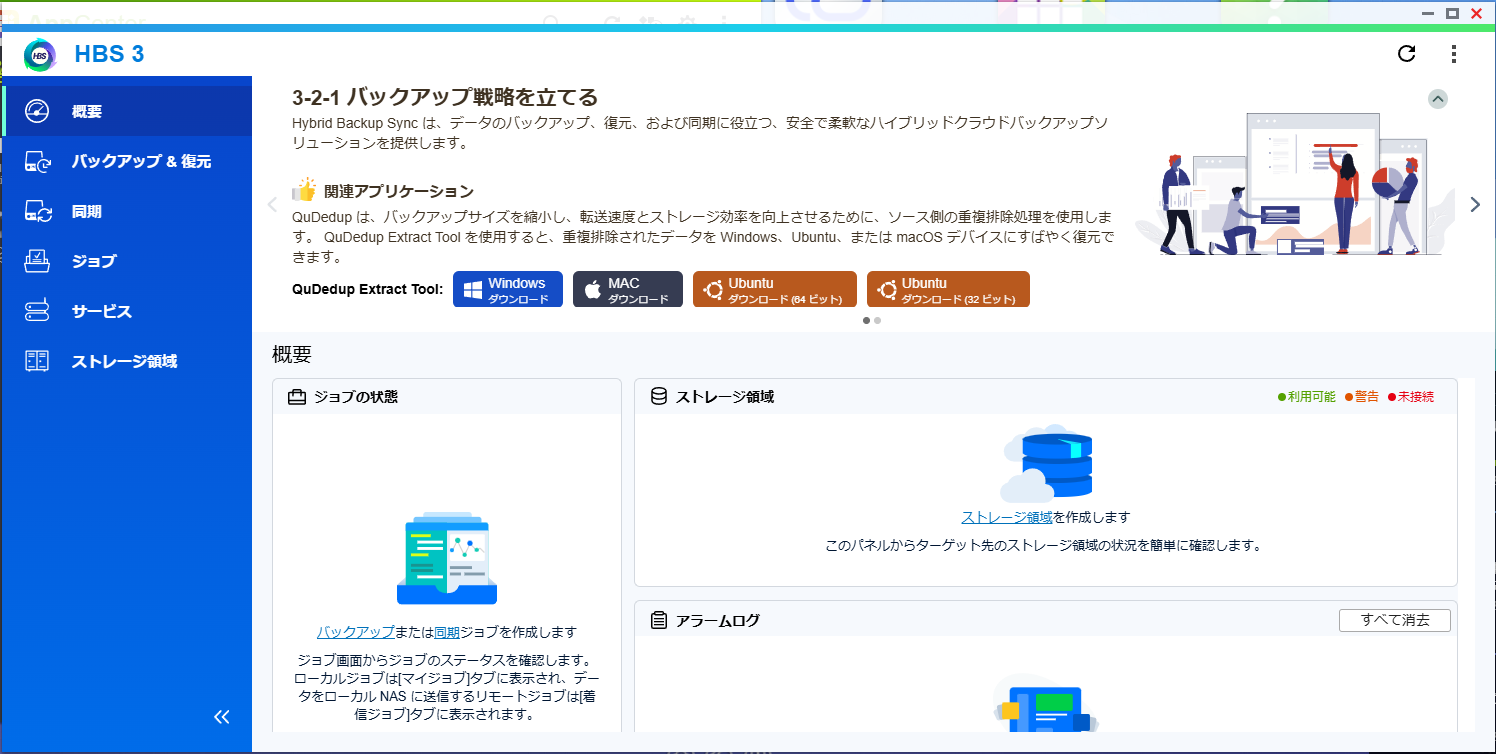
After moving to Storage Space, click “Create.”
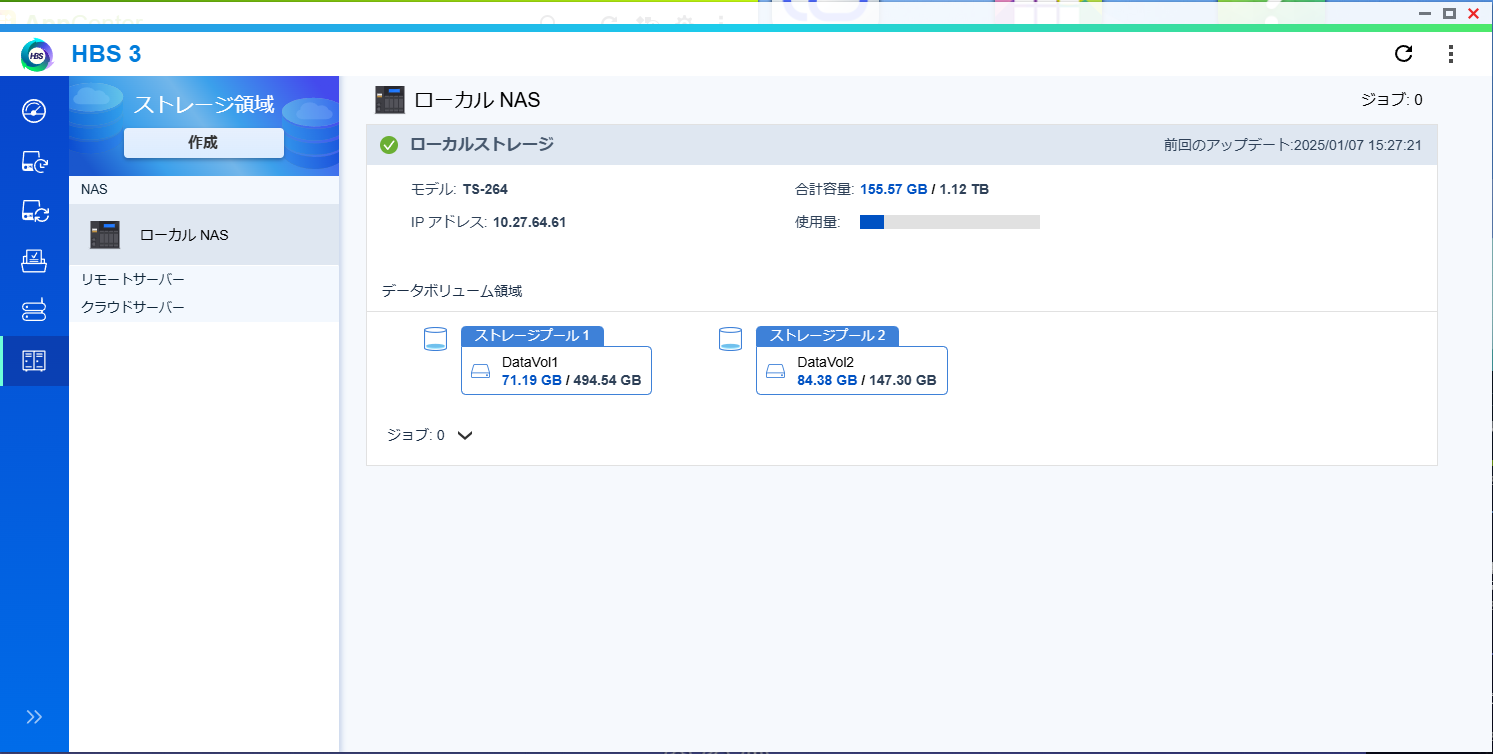
Select “Google Drive,”
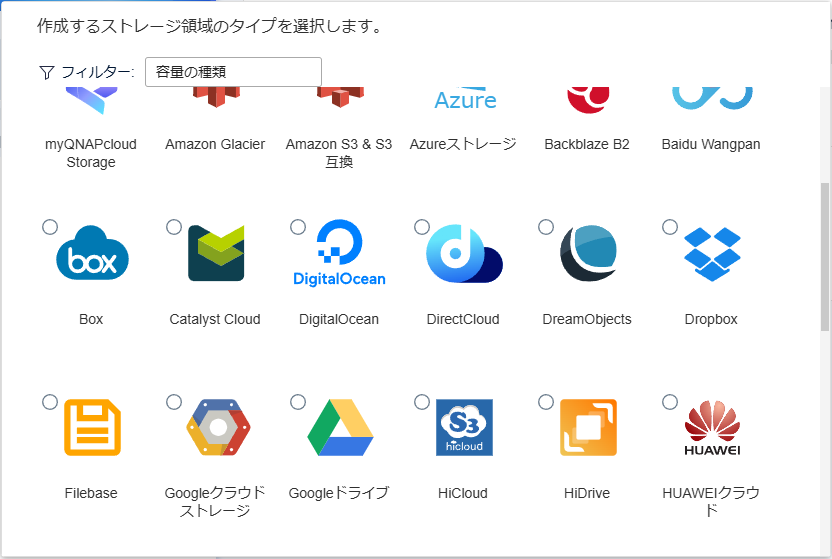
Choose the account,
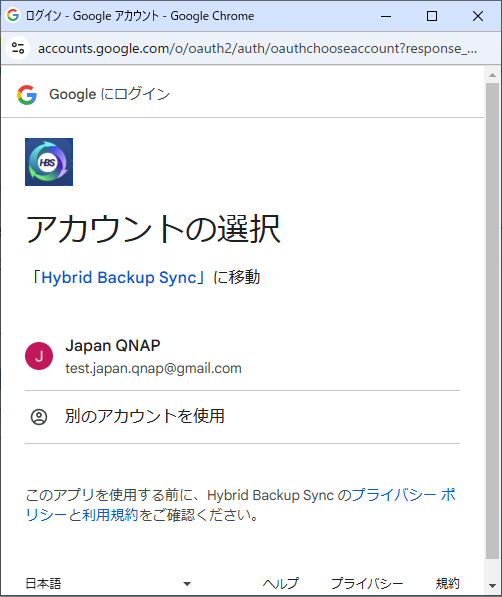
and add it.
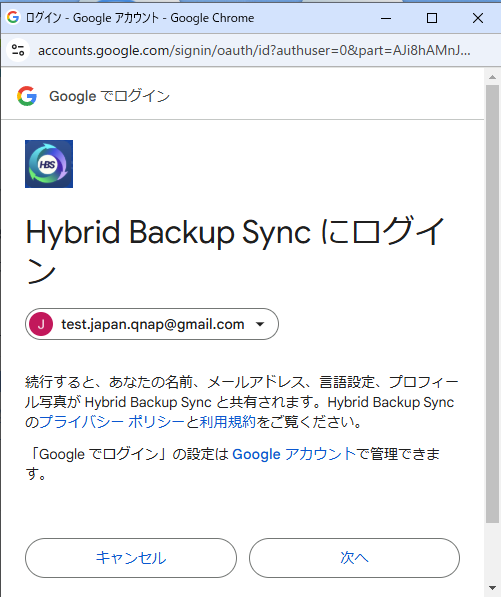
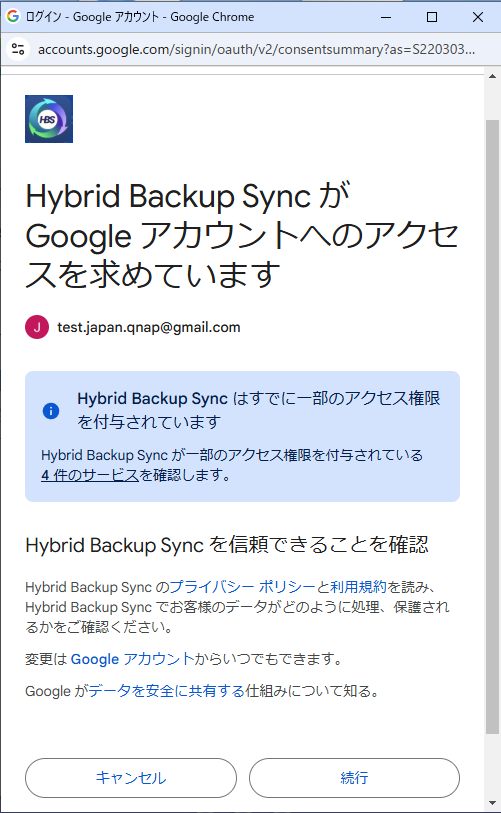
Allow HBS 3 to access Google Drive.
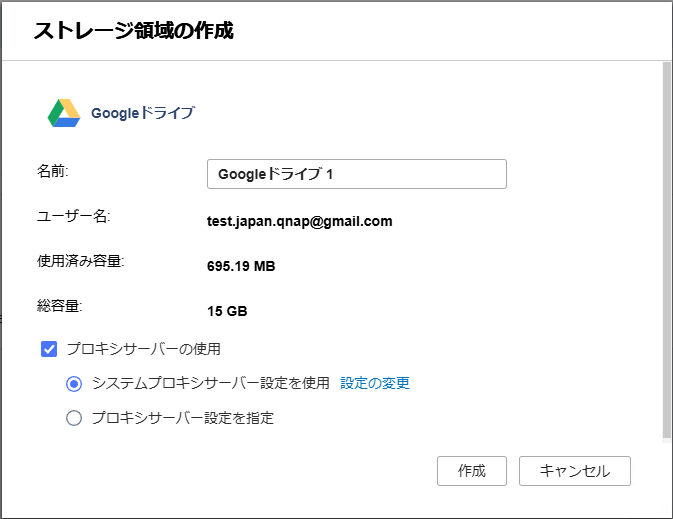
Click “Create” to add the first account.
It will also be displayed in the list of storage spaces.
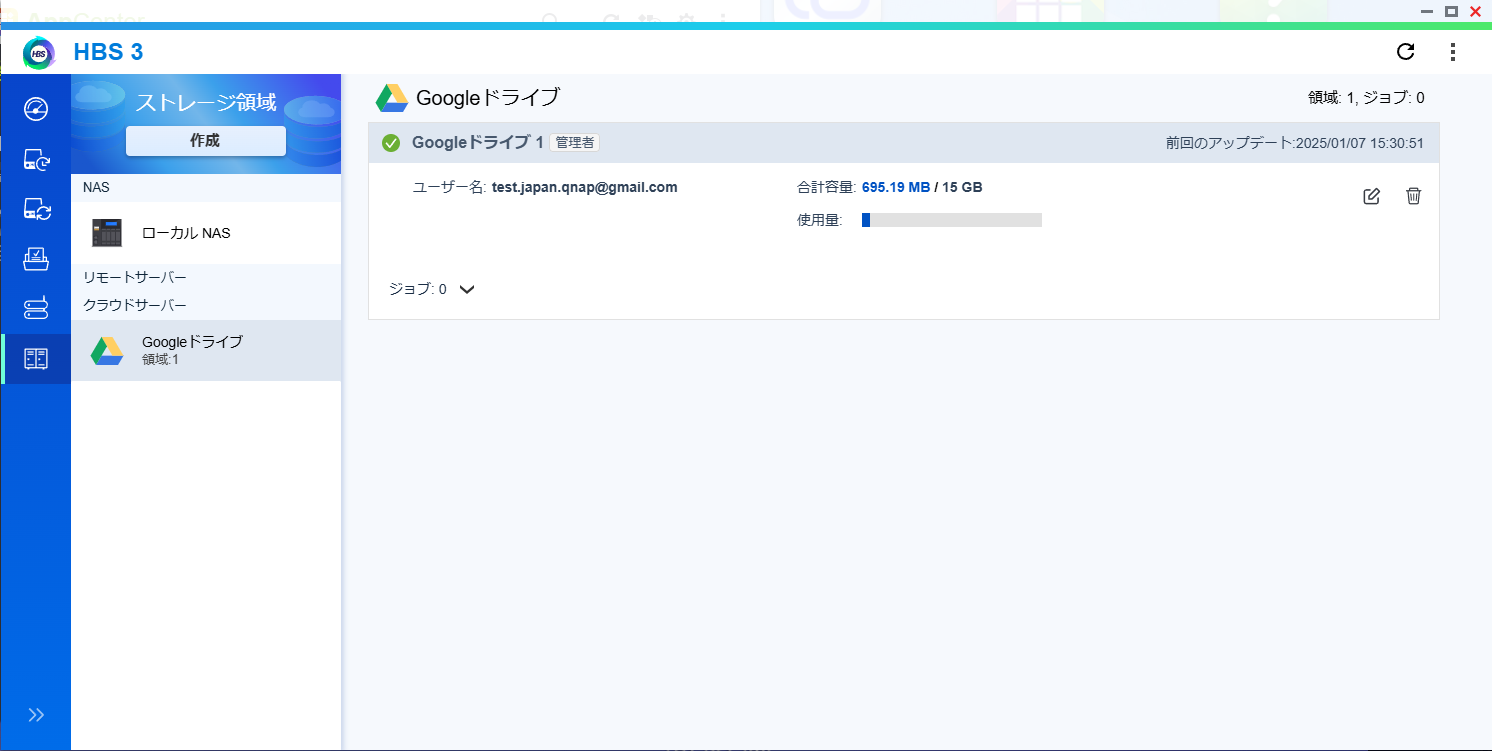
Add the second account in the same way.
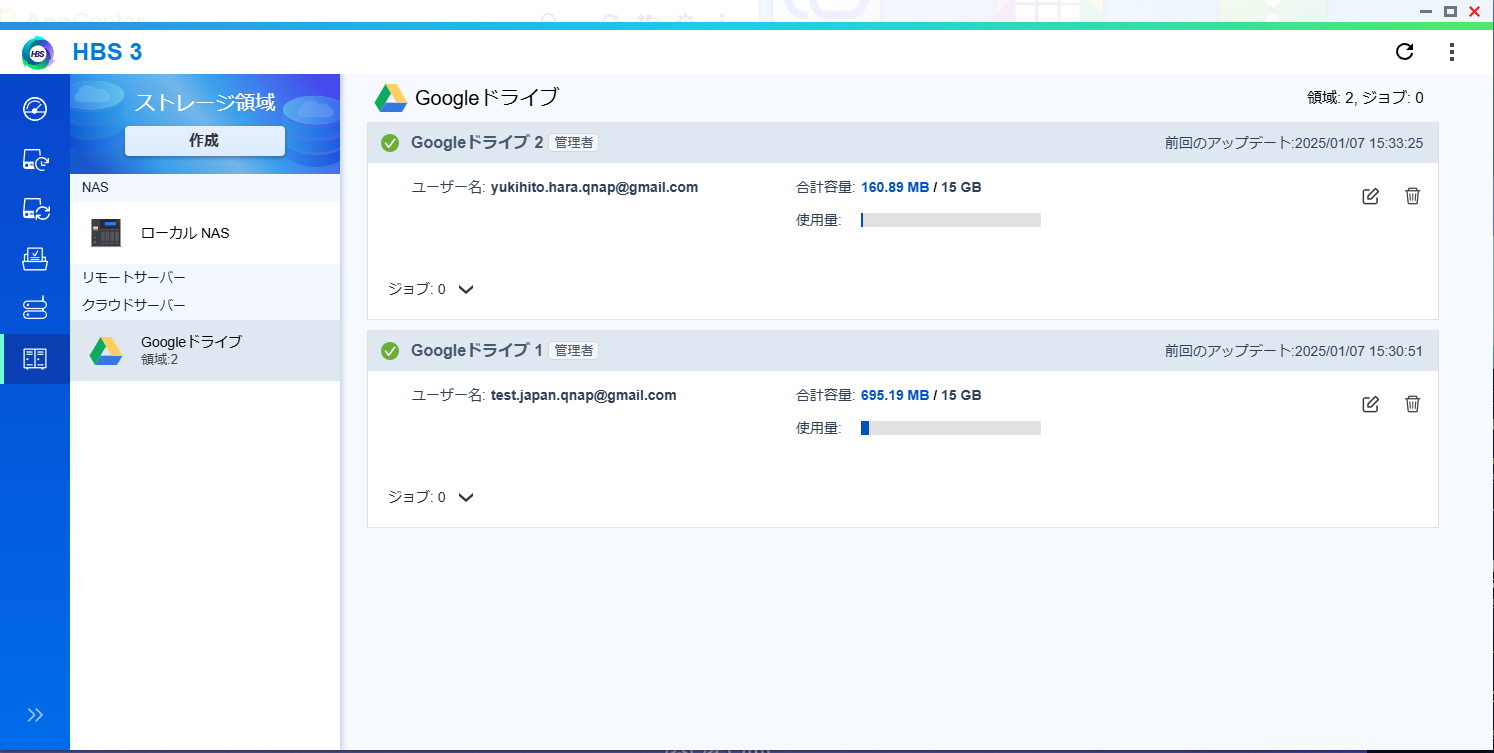
It was added like this. If two accounts work, three or four should also be fine.

Performing the Backup

Under the Public folder, create folders named “yukihito” and “test,” and create some dummy data as backup targets.
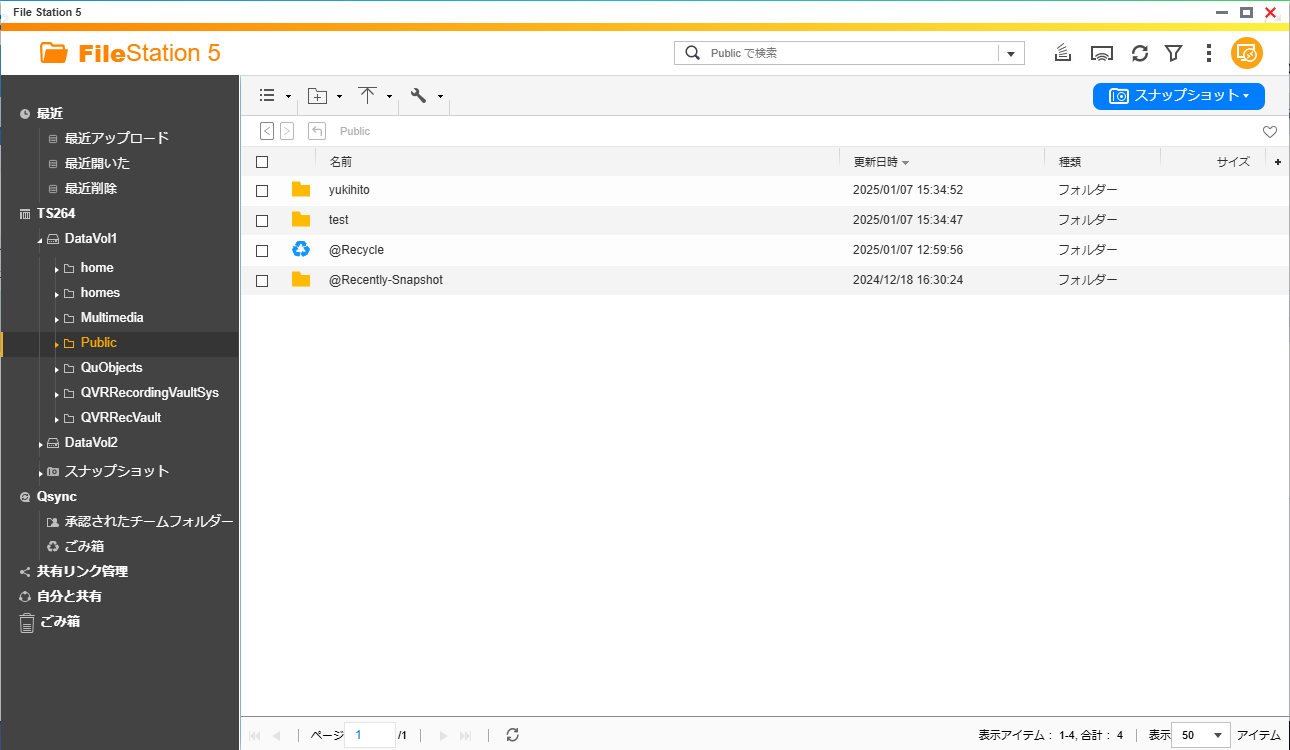
I created them like this.

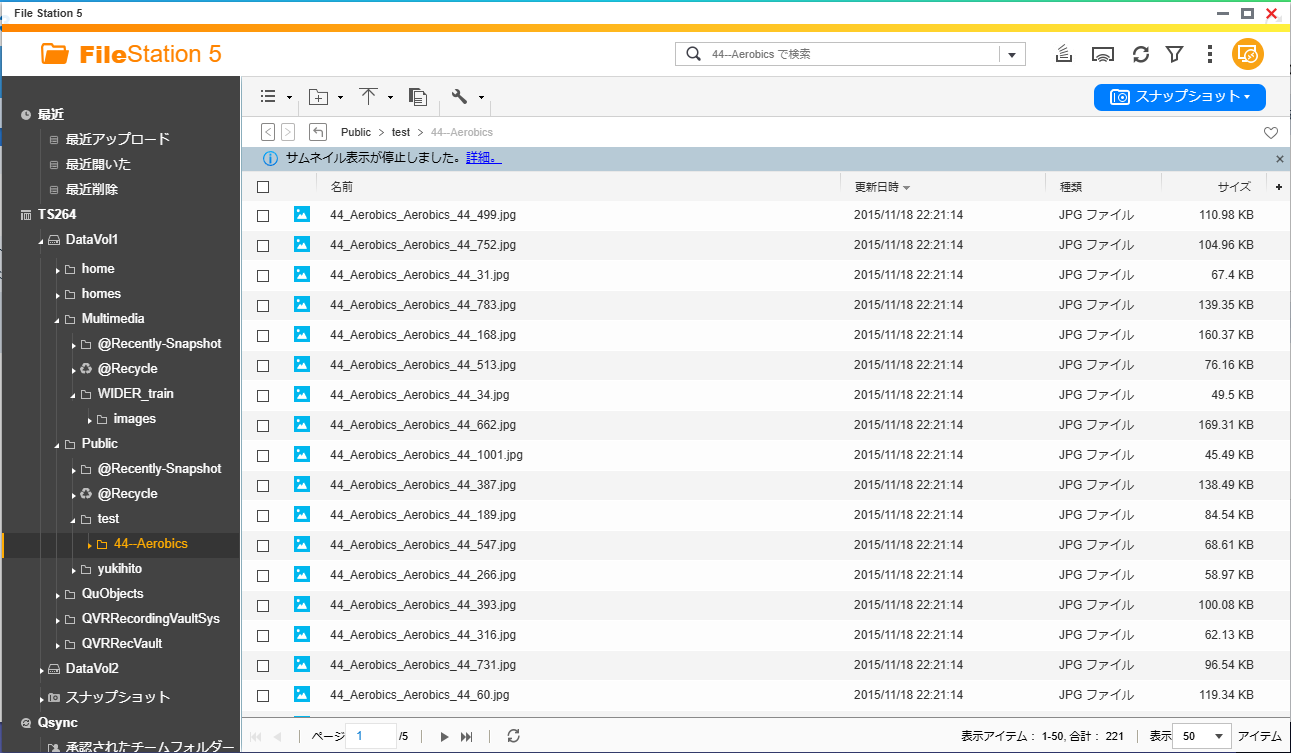
Both are around 50MB or less.
Create a backup task and execute the backup.

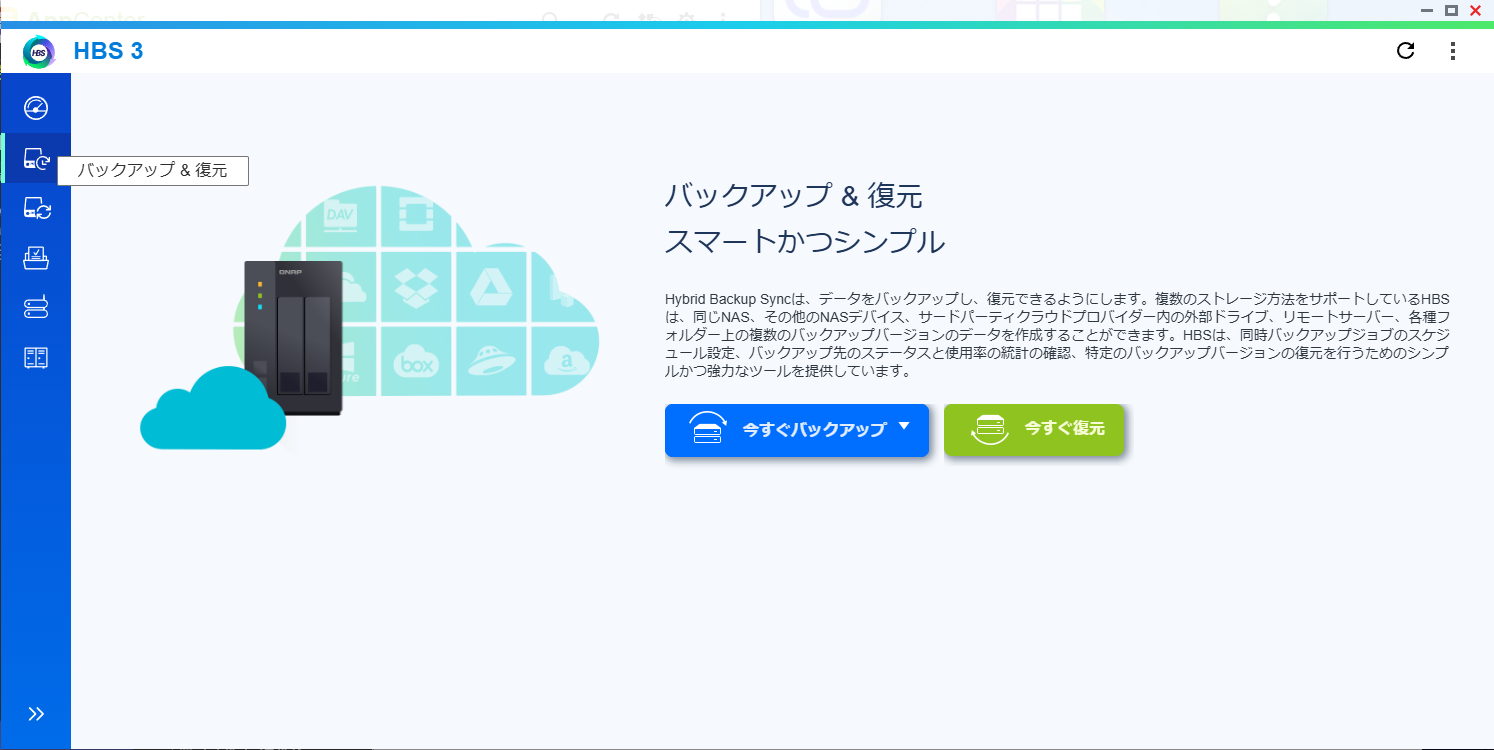
Move to “Backup & Restore” in HBS 3 and click “Backup Now.”
Back up the “Public\test” folder
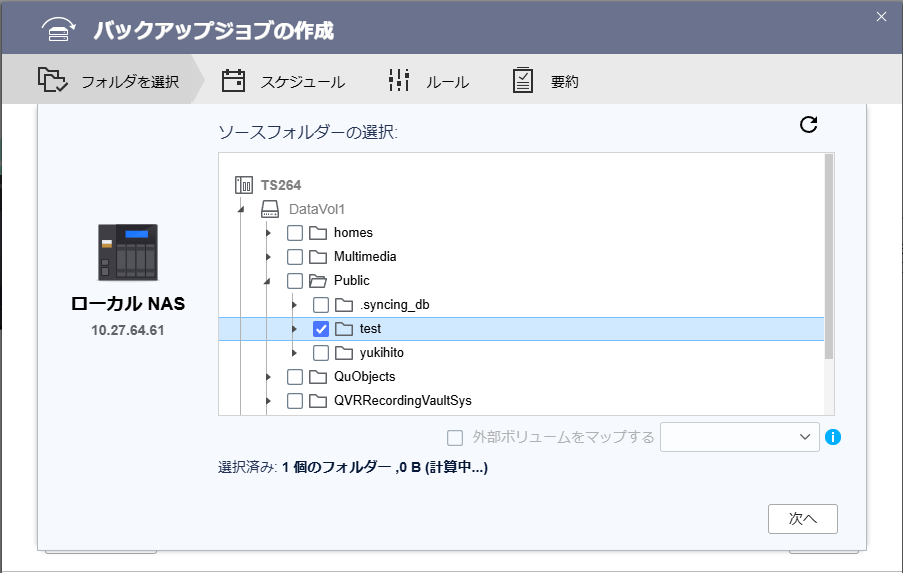
to the test account.
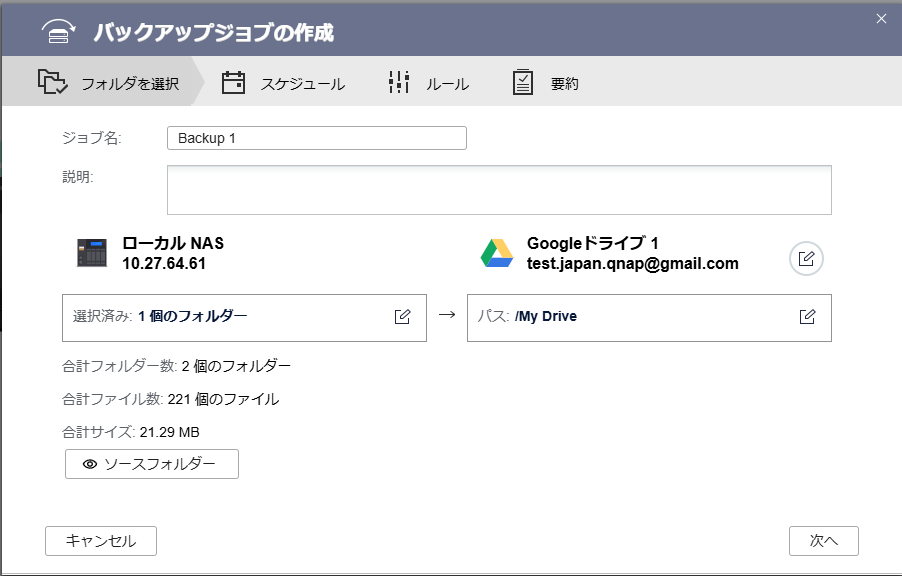
Back up the yukihito folder
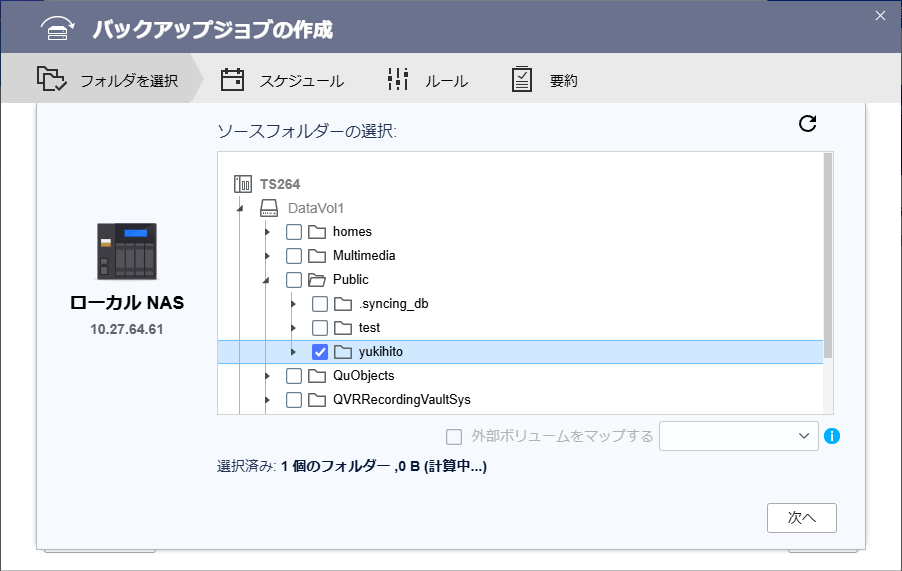
to the yukihito account.
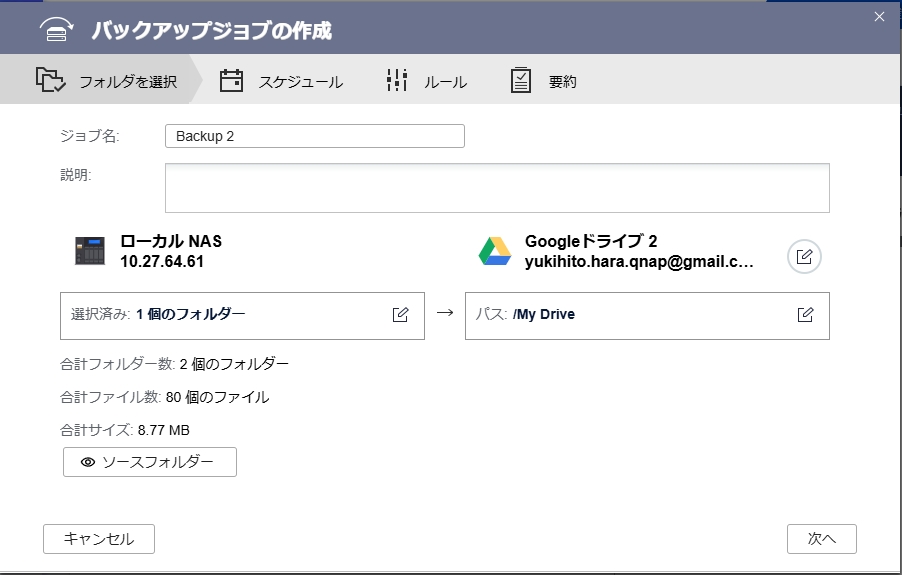
With HBS 3, you can “execute another backup job after the previous backup job is finished,” so after the test backup is done, proceed with the yukihito backup.
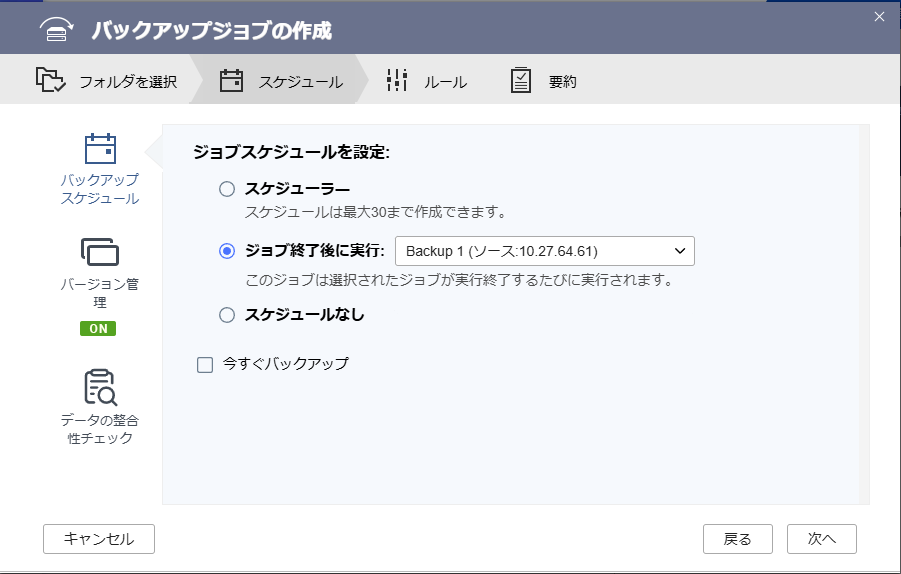
The backup jobs have been created, so click “Backup Now” for the test one to run it manually.
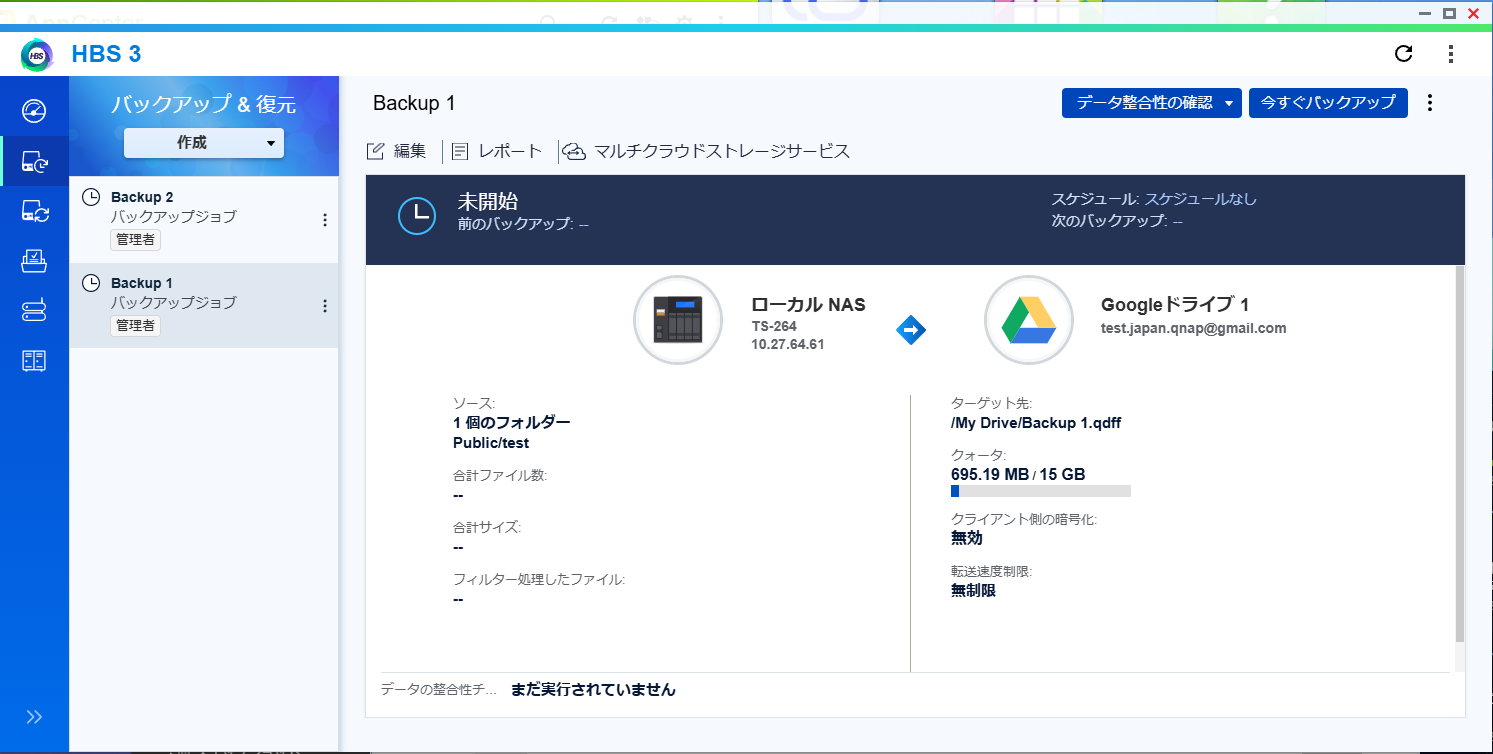
After a while, both backups completed successfully.
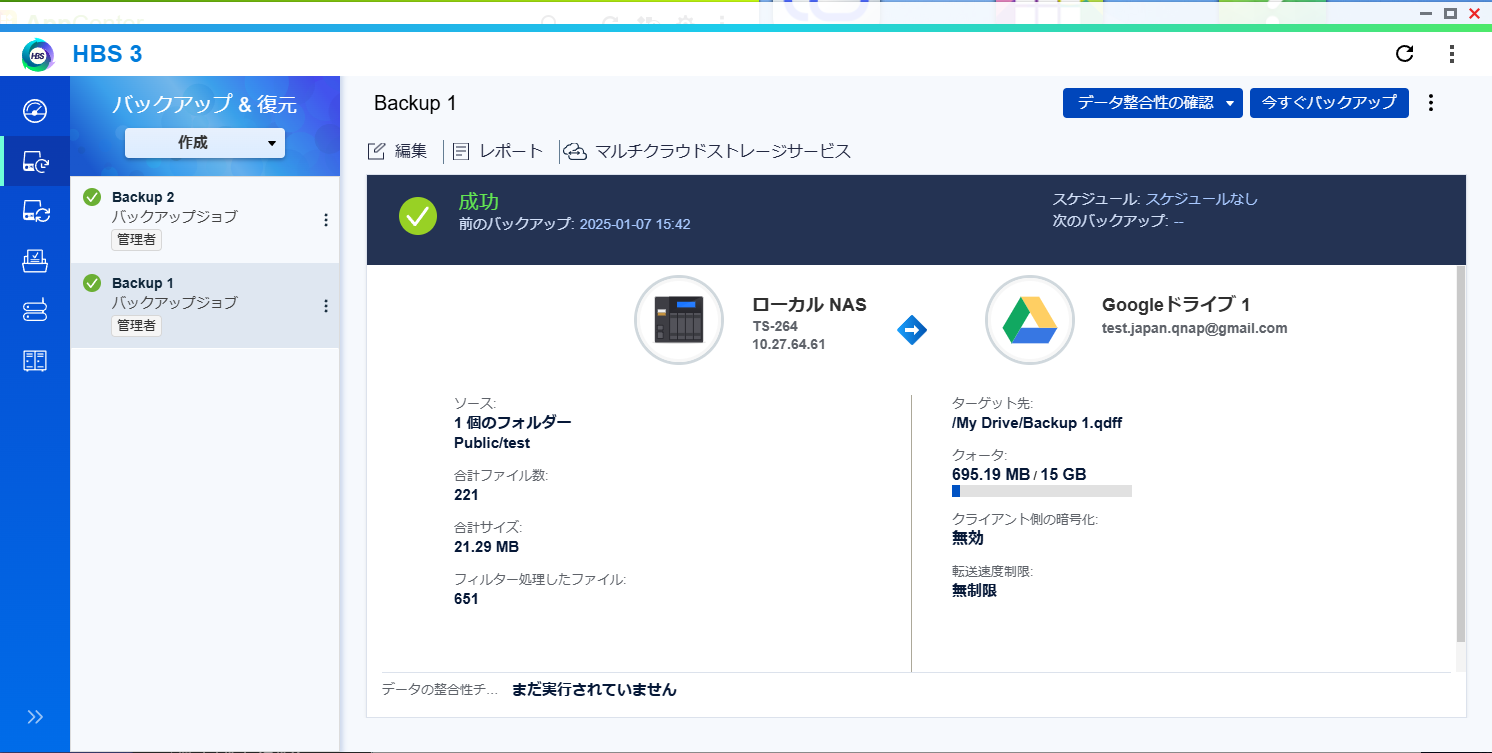
From the above, it is clear that it is possible to back up from a QNAP NAS to separate accounts on cloud storage.

Summary

This time, I shared the results of verifying whether it is possible to back up from a QNAP NAS to separate accounts on the same cloud storage service. (Sync should also be no problem.)

There were no particularly difficult parts, and you should be able to set up and execute the backup as usual.

Also, if you run them simultaneously, there is a possibility that you may saturate your internet bandwidth, but since you can chain backup tasks, you don’t have to worry about bandwidth being saturated.

With this kind of setup, QNAP NAS is designed to be operated flexibly.
2 Likes

Is it not possible to back up data from Google Drive to QNAP?

I have three QNAP devices: I copy the data from the main device to a backup QNAP, and since the amount of data in the cloud has been increasing, I was just thinking that I need to back it up as well.

1 Like

@kenken

Thank you for your question!

For the direction from Google to QNAP, with HBS3, synchronization is possible but backup is not.

When performing a backup, “pre-processing” is required, but when the remote side becomes the backup source, this “pre-processing” cannot be performed efficiently.

  • Mainly, this refers to processing such as checking whether there are any differences from the previous state, and if so, which parts have changed.

If you are using Google Workspace, you can back up using Boxafe.
For small-scale environments, there are licenses available for free use, so we hope you will consider it.

Also, if “synchronization” is sufficient for your use case, how about performing synchronization with HBS3?
For example, if you synchronize once a week, even if data on the cloud side is unintentionally changed or deleted, as long as you notice it within a week, you can restore it from the NAS.
Additionally, it is possible to back up data that has been brought on-premises through synchronization.

Thank you for your reply.
It seems there are various solutions available.
I apologize for the basic question, but I would like to ask about the difference between synchronization and backup.

  • Synchronization
    The same files exist on both the cloud and QNAP on-premises at specified intervals. If one is updated, the other will be updated at the specified timing.
  • Backup
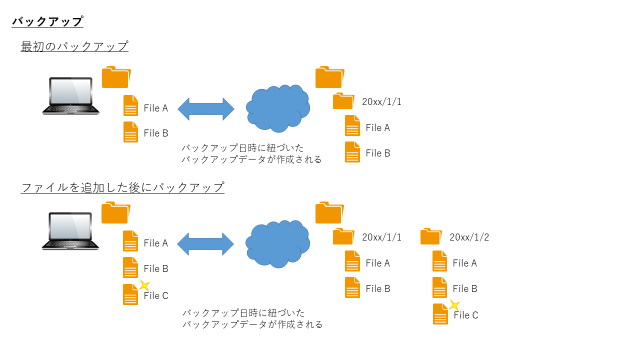
    At the time of the backup process, files from the cloud are copied to QNAP on-premises. With each backup, the files remain on QNAP on-premises as a history.

Is my understanding correct?
Since synchronization does not keep a history, I feel that backup might be more suitable for us. I will consult with the president and decide what to do.

Unlike asking support, communicating on the forum feels refreshing and nostalgic, like the old days of personal computer networks.

@kenken

Yes, I believe your understanding is generally correct.

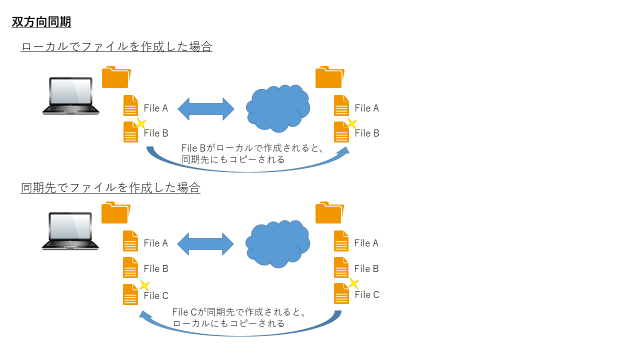
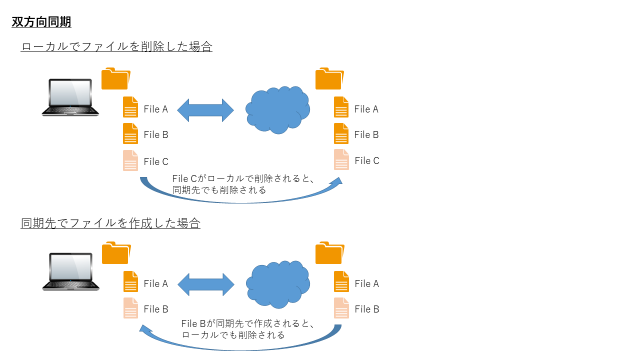
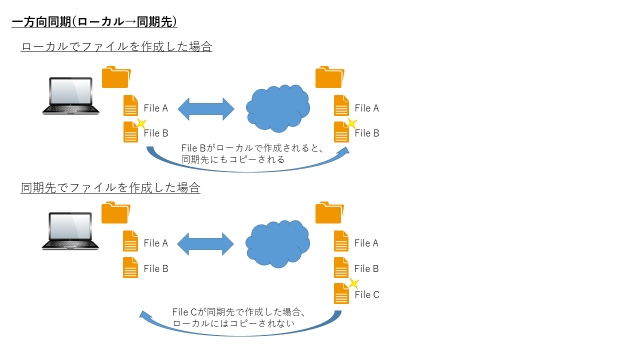
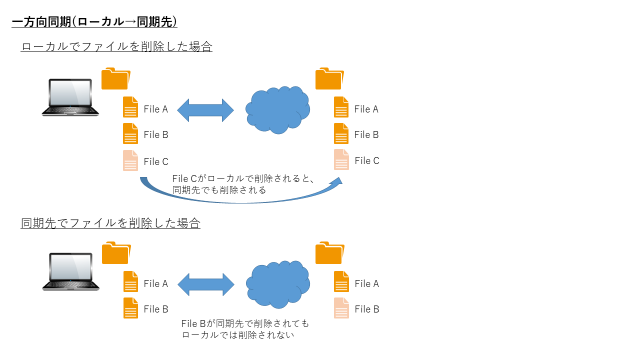
As a general explanation, I use diagrams like this to explain backups. In general, I describe a backup as “being able to restore a set of files from a specific version in the past.”

Regarding synchronization, there are one-way and two-way syncs, but as you understand, synchronization occurs immediately or according to a specified schedule.
Two-way synchronization


One-way synchronization


So, as you understand, if you need to keep past versions as well, you will need a “backup.”

Combining with snapshots might also be a good idea.
GoogleDrive → QNAP: Keep them synchronized.
By taking snapshots on the QNAP NAS, you can restore or reference past synchronized versions from the snapshots.

→ If you’re looking for a simple solution, this is probably what I would do.

Was it the era of dial-up and grassroots BBS? Nifty-serve, etc.—those were nostalgic times, weren’t they? lol