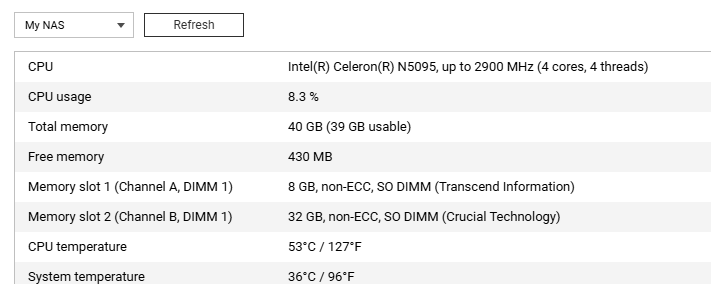
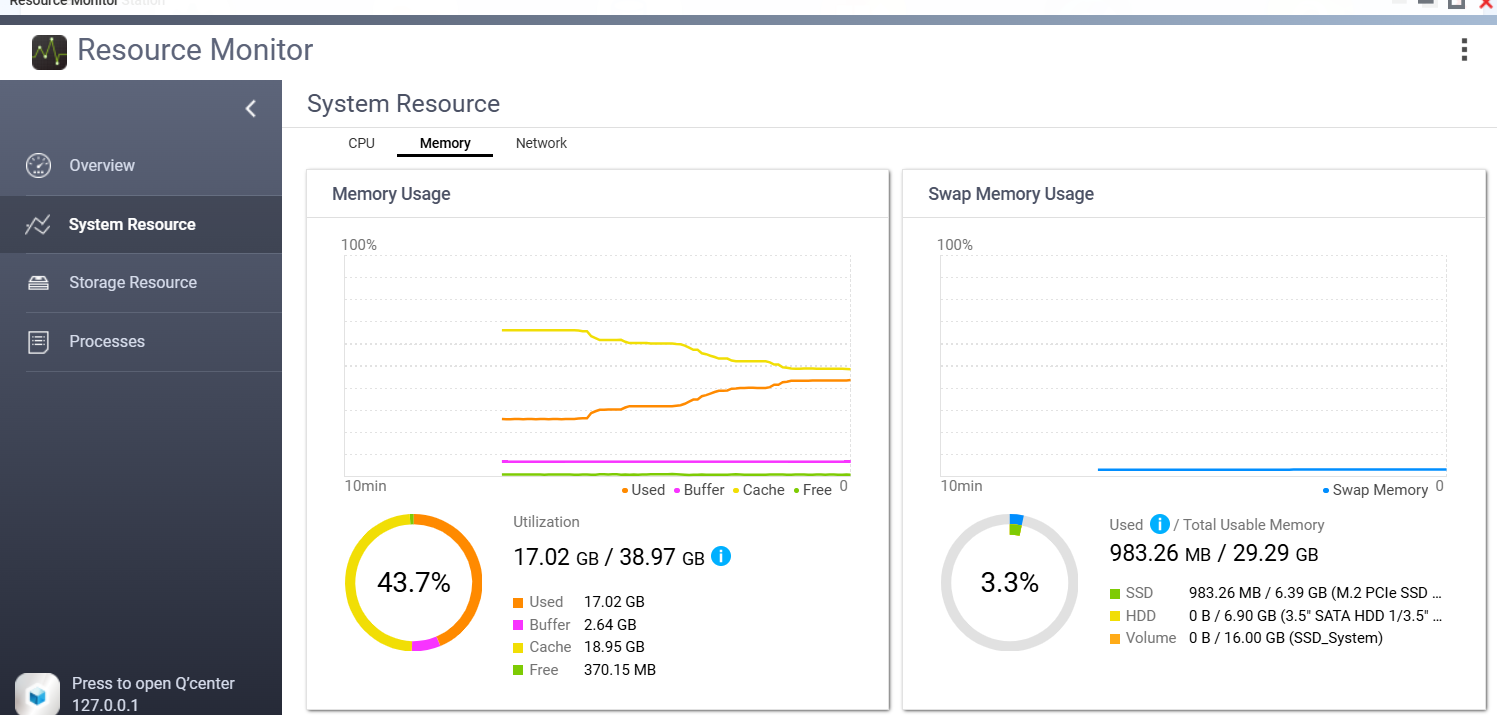
On another forum I was informed that the TS-664 was capable of supporting more than the 16Gb that I currently have installed as evidenced by the person’s personal experience doing so.
Other than the cost ( ~$450 US), is there any reason why I should not try it?
Probably. I worked in the semiconductor industry for years before retiring a couple months ago. Costs are primarily based on the amount of capacity to fabricate new chips. Right now, the AI boom is taking up nearly all the capacity. There’s a move on by multiple companies to expand fab capacity but that’s a very capital intensive endeavor and takes some time to qualify the fabs and bring them online.
Based on what I know (and as a good guess), I would say we have another 6 months or so of pain and by then the added capacity should start to come on line which will begin to ease prices a bit…
Thanks Jon. This is good to know. I may hold off purchasing some things for a while.
Incidentally, we had a discussion earlier about the pros and cons of tool-less disk caddies and I have been converted to your way of thinking. One of the deciding factors was R&R’ing eight disks in a NAS with four screws in each caddy.
Yeah, thank you. Unless your NAS in in an environment with a lot of vibration, there’s no need for screws.
I use screws in one of my drives only because the NAS I bought was used and the drive caddy was slightly cracked and didn’t hold the drive in place well enough otherwise…
As for pricing, I have no real crystal ball. Prices could get worse, but I do know there’s multiple companies bringing up capacity, so my gut tells me that things will get better. If you need the memory now, buy it. But if you can wait six months to a year, I think things will get better.
Yes, despite what QNAP & Intel may claim, expanding past 16GB is possible. I took a similar unit to 64GB, but have since reduced it to 32GB. In normal use, even with ZFS, memory consumption stays within the 16GB limit and resists going past with almost a passion. If you have some extra with no other use, tnen allowing extra headroom seems like a reasonable use. If you use container station, then it’s easy to exceed the default maximum but the performance is not great. If you can use both “channels” there should be some performance gain.
QNAP must have had a reason for identifying their “limits” although that rationale escapes me at the moment. Maybe it was the perceived max memory that most people would ever need and their designing their software to work almost “passionately” to keep the memory usage below that amount as was mentioned earlier.
It’s in Intel’s own documentation that 16GB is the limit! Turns out not to be true, although whether the CPU performance justifies the full 64GB is debatable. I used the QNAP as an excuse to buy a 32GB SODIMM and after discovering that coupled with a 16GB module the QNAP could see it all, I put the 32GB into a 1U server that also claimed the 16GB limit and took its 16GB to make the two QNAP banks identical. I ended up with two devices both at double their claimed maximums and a big smile!
I guess I can understand QNAP not wanting to buck or further explore Intel’s documentation but leave it up to tweakers and explorers like you all to get to the real truth.
Now, the question I have would be would any of the QNAP developed software programs ever really be able to use the additional memory or would that be left up to other developers to use as much as the system has installed?